Reviewed · TOURS
Skip the Line: Medieval Tuida Fortress tours
Ancient walls reward a closer look. Sliven’s Tuida Fortress packs Roman, Byzantine, and Bulgarian history into one hilltop site, and I like the low price and the chance to add archery and medieval dress to a simple archaeological visit. The optional English guiding also helps turn scattered ruins into a story you can follow.
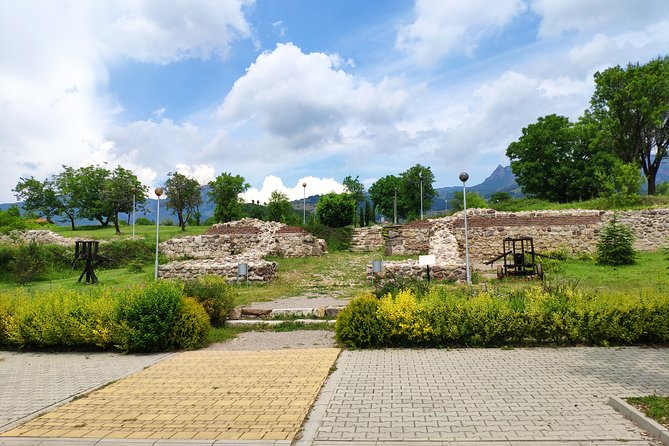
I especially like that the fortress includes more than walls and stones: you can see basilica remains, a baptistery, towers, gates, and traces of an old aqueduct. The main caution is simple: without a guide, some visitors may find the site sparse, with sun-faded signs and vegetation making parts harder to understand.
In This Review
- Key points to know before visiting
- Why Tuida Fortress deserves time in Sliven
- The long story of Tuida, from Rome to Bulgaria
- What you see inside the archaeological area
- The churches and baptistery are the site’s highlights
- Why a guide changes the experience
- Archery, medieval clothing, and activities for families
- Archaeological finds beyond the stones
- The honest drawbacks: ruins need patience
- Is $8.16 good value?
- Who should book Tuida Fortress?
- Should you book the Medieval Tuida Fortress tour?
- FAQ
- Where is the Tuida Fortress tour located?
- How much does the experience cost?
- How long does the experience last?
- Is the ticket available on a mobile device?
- Is the experience offered in English?
- Is guiding included?
- Are archery and medieval clothing included?
- Is an E-guide included?
- What can you see at Tuida Fortress?
- Should you wear special clothing?
- Is food included?
- Are service animals allowed?
- Can most people participate?
- How large can the group be?
- Can you cancel for a full refund?
Key points to know before visiting
- A 4th-century fortress with several lives: Tuida survived one invasion, was destroyed by another, rebuilt under Emperor Anastasius I, and later fell around 598 or 599 AD.
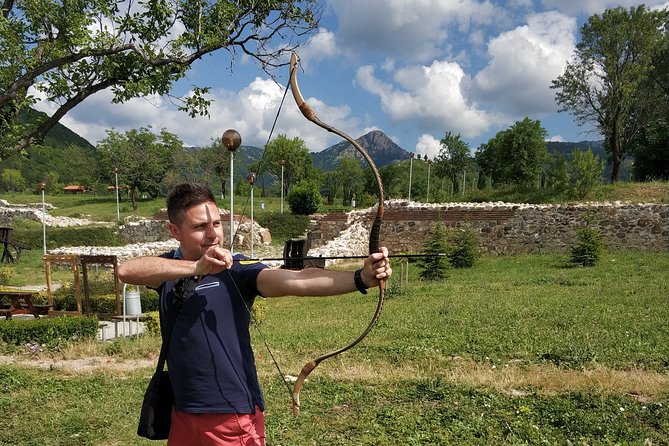
- Optional hands-on activities: Depending on the package you book, you can try archery, medieval games, and period clothing.
- An important Bulgarian connection: The site later belonged to the First Bulgarian Empire and produced a lead seal linked to Knyaz Boris I Mihail.
- The best value comes with interpretation: A guide can explain the basilicas, ancient inscriptions, and changing military role of the site.
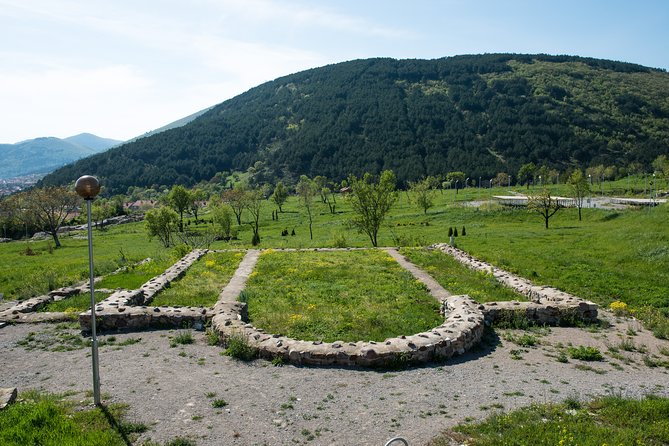
- A small archaeological site, not a complete fortress: You will see foundations, walls, towers, gates, and church remains rather than a fully reconstructed castle.
- Good for families and history fans: The activities give children something to do, while the ruins and views reward adults who enjoy archaeology.
Why Tuida Fortress deserves time in Sliven
Tuida Fortress is not the kind of monument that overwhelms you from the road. Much of what survives is low stonework, partial walls, and foundations. That first impression can be misleading.
Inside, the site becomes far more interesting. You can trace the outlines of buildings, look at fortress towers and gates, and picture a settlement that changed hands and purpose over several centuries. The appeal comes from the layers. Tuida was not just a military outpost. It was also a religious center, a market settlement, and later a Bulgarian stronghold.
I find this sort of place rewarding because it asks you to use your imagination without asking you to invent everything. The archaeological remains give you a firm outline, while the guide or E-guide supplies the missing pieces.
The setting also gives you a different way to see Sliven. The fortress occupies about 40 decares, roughly 10 acres, and the remains outside the walls suggest that the settlement spread beyond the fortified area. You are not looking at an isolated pile of stones. You are seeing the center of a wider community.
Other outings in Bulgaria booked alongside this one:
- From Bucharest: Full-Day Trip to Bulgaria
★ 4.6 · 1,008 reviews - Rila Monastery and Boyana Church Full-Day Tour
★ 4.5 · 918 reviews - Sofia Escape Room – Teorema Rooms
★ 5.0 · 895 reviews
The long story of Tuida, from Rome to Bulgaria
The earliest major chapter described at the site reaches back to late antiquity. Tuida escaped destruction during the Gothic invasion of 378 AD, but the Huns destroyed it in the 5th century.
Roman Emperor Anastasius I, who ruled from 491 to 518 AD, ordered the fortress rebuilt. The new work kept parts of the earlier design while strengthening and improving the complex. This is one reason the site is useful for understanding how Roman and Byzantine defenses developed over time.
Tuida was eventually destroyed around 598 or 599 AD, probably during an invasion by Avars and Slavs. The date matters because it shows how quickly power could shift in this part of the Balkans. A fortress could be rebuilt, adapted, and then lost again within a few generations.
The story did not end there. Around 705 AD, the area around modern Sliven became part of Bulgaria, then known as the First Bulgarian Empire. Bulgarian Khan Tervel helped Byzantine Emperor Justinian II regain his throne in Constantinople, and in return gained the Zagore Region south of the Balkan Mountains.
A Bulgarian settlement with an unknown name was then established at Tuida. Archaeologists found a lead seal belonging to Knyaz Boris I Mihail, who ruled from 852 to 889 AD. That small object gives the site a direct link to one of Bulgaria’s most important medieval rulers.
The Bulgarians rebuilt the fortress walls and aqueduct. They also added new buildings covered with marble slabs made by stone cutters in Veliki Preslav, the Bulgarian capital at the time. Bricks marked with an Ancient Bulgar sign resembling |Y| have also been found here.
You will get more from this information with a guide. On your own, you may notice masonry, foundations, and scattered artifacts. With explanation, you can understand why those details matter and how the site fits into Bulgarian history.
What you see inside the archaeological area
The visible remains form the heart of the visit. Excavations began in 1982 and resumed in 2004, revealing fortress walls, towers, gates, and building remains.
The walls help you understand the basic defensive plan. They are not intact to castle height, so do not arrive expecting battlements, grand halls, or restored interiors. Instead, you follow the footprint of a fortified settlement and look for the places where people entered, defended, worshipped, worked, and lived.
The towers and gates are especially useful for picturing the fortress as an active military site. Even partial remains can show how movement through the settlement was controlled. Your guide can also help you distinguish defensive structures from later religious or domestic buildings.
The aqueduct is another important feature. The Bulgarians repaired it rather than simply abandoning the earlier infrastructure. That small detail tells you something about daily life: a fortress needed dependable water, and its builders were willing to maintain older systems when they remained useful.
One of the most unusual finds is a pair of marble pedestals dedicated to Apollo and Zeus. They preserve the fortress name in forms such as Tuida or Suida, while written sources also refer to Tsoida. For a visitor, this is a rare pleasure. You are not just seeing an ancient place, you are seeing evidence that helps identify it.
A 3rd-century inscription describes the settlement as a marketplace. That widens the picture again. Tuida was connected to trade and local commerce, not only soldiers and walls.
The churches and baptistery are the site’s highlights

The religious remains may be the most surprising part of Tuida. Inside the fortress, archaeologists uncovered a cult complex used from the 4th through the 13th century.
It includes a three-nave, one-apse Early Christian basilica and a distinctive baptistery decorated with murals and mosaics. These remains give the site a spiritual dimension that is easy to miss if you focus only on the military walls.
The baptistery is particularly worth your attention. A dedicated baptismal building was not an ordinary feature, and its decorated surfaces suggest that the Christian community here had both organization and resources. Ask your guide to explain what survives and what has been reconstructed or interpreted.
Outside the fortress walls, a larger basilica was also found. Its position supports the idea that the settlement extended beyond the protected area. That is a useful detail when you stand inside the walls and try to understand the scale of Tuida. The fortified section was important, but it was not the whole town.
Do not expect every mural, mosaic, or architectural feature to be preserved like a museum display. This is an archaeological site, and some remains are fragmentary. Its value lies in seeing the arrangement and the evidence in place.
Something quite different to do in Bulgaria:
- From Sofia: Rila Monastery & Boyana Church Day Tour
★ 4.5 · 866 reviews - Communist Walking Tour of Sofia
★ 5.0 · 690 reviews - Admission Ticket to the Museum of Illusions in Sofia
★ 5.0 · 659 reviews - Wine Tasting in Heart of Sofia
★ 5.0 · 545 reviews
Why a guide changes the experience
The basic admission is inexpensive, but the guiding option can make a large difference. At $8.16 per person, this is already an easy addition to a day in Sliven. If your package includes an English-speaking guide, the extra context may be the best part of the purchase.
The site has several periods layered together. Roman and Byzantine rebuilding, Bulgarian occupation, Christian worship, trade, and military defense all appear in a relatively compact area. Without help, those periods can blur together.
A guide can explain why one wall belongs to a different phase than another, point out the significance of the marble pedestals, and connect the Bulgarian remains with Veliki Preslav. The guide can also make the activities feel less like a side attraction and more like a way to understand the period.
The experience has received praise for clear storytelling and for guides who show visitors less obvious details. One guide even allowed a visitor to keep a small piece of ancient ceramic. That should not be treated as a standard inclusion, and you should never remove anything from an archaeological site yourself, but it shows how personal the interpretation can sometimes be.
If you prefer to explore independently, the E-guide gives you another option. Still, the available information suggests that a guided visit is the safer choice if you want the history to make sense.
Archery, medieval clothing, and activities for families
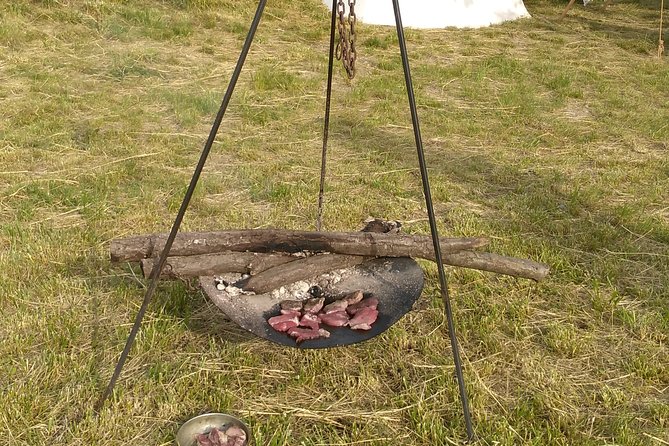
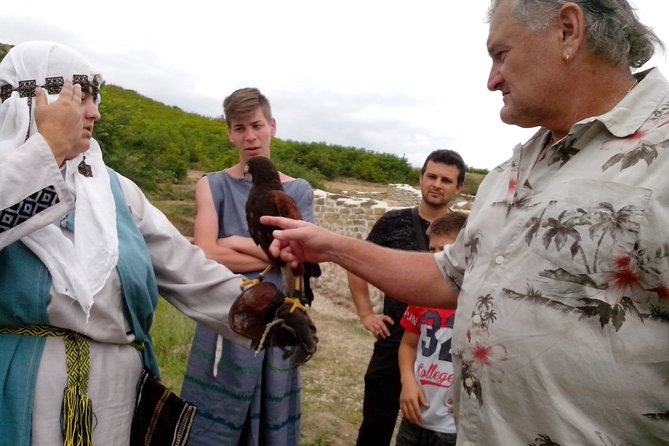
If you book the activity option, Tuida becomes more interactive. Archery and medieval clothing are specifically available, and the site also offers medieval games.
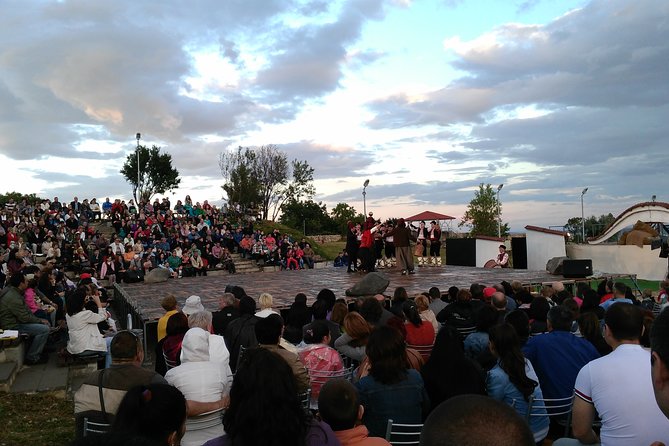
I like this addition for families. Children may not spend long studying a broken wall, but they can connect with the period through a simple activity. Adults can enjoy the same feature without treating it as a children-only stop. Trying on medieval clothing also makes for memorable photographs.
The activity option is not a replacement for the archaeology. Think of it as a useful extra, especially if you are visiting with young people or want more than a quiet walk around foundations.
The exact activities depend on the option booked, so check that archery and medieval dress are included in your selected package. The standard information lists them as included only when that option is booked.
Archaeological finds beyond the stones
Tuida has produced a broad range of objects. Excavations uncovered iron tools, ceramic vessels, ornaments, coins, and animal bones.
The animal remains are unusually varied. Bones from 14 species of wild and domesticated birds were found, including Bonelli’s eagle, western capercaillie, great bustard, and common pheasant. These finds offer clues about food, hunting, trade, and the natural setting around the settlement.
You will not necessarily see all of these objects displayed during your visit, so do not judge the site by the amount of material visible on the ground. The important point is that excavation has revealed more than architecture. Tuida also preserves evidence of how people used the area.
The lead seal of Knyaz Boris I Mihail is one of the most meaningful discoveries. A seal is a small object, but it ties this otherwise distant site to a named ruler and a specific period of Bulgarian power.
The honest drawbacks: ruins need patience
Tuida is best for someone who enjoys archaeology. If you want a grand, intact fortress with rooms you can enter, this may feel modest.
Some visitors have found the site disappointing without a tour. The remains can look like walls, scrub, and scattered stones, while signs may be difficult to read if they have been bleached by the sun. Vegetation can also make walking around parts of the site less straightforward.
That criticism is useful advice, not a reason to skip Tuida. Book the guide if you are not comfortable interpreting ruins on your own. The site’s strongest features are historical and architectural, and those are much easier to appreciate when someone explains what you are seeing.
Wear comfortable shoes, as requested for the activity. Food, drinks, and personal expenses are not included, so plan those separately. The experience accepts service animals, and most people can participate.
The maximum group size is 50. That is not a tiny private tour, so the feel may depend on the number of people booked on your date. If you want the most personal explanation, arrive ready to listen and ask questions.
Is $8.16 good value?
Yes, particularly if you are already spending time in Sliven. The price is low for a site that combines a fortress, churches, a baptistery, an aqueduct, inscriptions, and optional activities.
The value depends on what you choose. Basic admission suits independent visitors who enjoy reading, looking, and forming their own picture. The guided option is better for anyone who wants the Roman, Byzantine, and Bulgarian periods explained in a clear order.
Archery and medieval dress add fun rather than archaeological depth, but they can make the price feel even better for families. You are getting an inexpensive cultural stop with something hands-on available.
There is no food or drink included, and no transport is listed, so do not read the $8.16 price as a full-day package with transfers or meals. It is best understood as access to the fortress experience, with selected extras depending on your booking.
Who should book Tuida Fortress?
I would recommend Tuida to history fans, families, photographers, and anyone looking for a less obvious stop in Sliven. It also suits visitors who like seeing how several eras occupy the same ground.
The English option makes it useful for international visitors. An E-guide is included, and guiding may be included if you select that option. If your interest in Bulgaria includes the First Bulgarian Empire, Knyaz Boris I, Veliki Preslav, or early Christianity, this site offers plenty to think about.
I would be more cautious if you dislike ruins or need a polished, fully restored attraction. The fortress does not provide a complete medieval setting. It asks you to pay attention to foundations, fragments, signs, and explanations.
Should you book the Medieval Tuida Fortress tour?
Book it if you want a low-cost history stop with optional activities and you are willing to look beyond the first impression. Choose the guided version if possible, especially if this is your first archaeological site in Bulgaria.
Skip it only if your schedule is extremely tight or your idea of a fortress requires intact towers and rooms. For everyone else, Tuida offers a sensible mix of archaeology, local history, family entertainment, and good value. The site may not shout for attention, but with the right explanation, it has plenty to say.
FAQ
Where is the Tuida Fortress tour located?
The experience is located in Sliven, Bulgaria, at the Medieval Tuida Fortress.
How much does the experience cost?
The listed price is $8.16 per person.
How long does the experience last?
It is described as a one-day experience, approximately.
Is the ticket available on a mobile device?
Yes. A mobile ticket is included.
Is the experience offered in English?
Yes. The experience is offered in English.
Is guiding included?
Guiding is included if you book the option that includes guiding.
Are archery and medieval clothing included?
Archery and medieval clothing are included if you book that option.
Is an E-guide included?
Yes. An E-guide is included.
What can you see at Tuida Fortress?
You can see fortress walls, towers, gates, building remains, an aqueduct, basilica remains, a baptistery, marble pedestals, and archaeological evidence from several historical periods.
Should you wear special clothing?
Comfortable shoes are recommended.
Is food included?
No. Food, drinks, and personal expenses are not included.
Are service animals allowed?
Yes. Service animals are allowed.
Can most people participate?
Yes. Most people can participate.
How large can the group be?
The maximum group size is 50 people.
Can you cancel for a full refund?
Yes, if you cancel at least 24 hours before the experience start time. Cancellations made less than 24 hours in advance are not refunded.
New in Bulgaria
- Plovdiv Roman Sights Self-Guided★ 4.5 · 3 reviews
- Tour to Koprivshtitsa and the Buzludzha monument incl the Seuthes Thracian Tomb★ 3.5 · 3 reviews
- Transfer from Sofia to Stara Zagora★ 5.0 · 3 reviews
- Transfer Plovdiv to Sofia airport/city with a car 3+1★ 5.0 · 3 reviews
- Wine trip with The Jolly Vintners near Sofia★ 5.0 · 3 reviews
- Private Buggy Experience All Seasons in Pamporovo★ 5.0 · 3 reviews
- Symbol of the Communism Buzludzha monument and the Rose valley★ 5.0 · 3 reviews
- Rent E-Bike in Belogradchik or Vidin★ 3.5 · 3 reviews
Tours, compared.

Sofia Highlights 2 Hour Sightseeing Walking Tour
Read our review →
Plovdiv Small Group Full Day Guided Tour from Sofia
Read our review →
Tour to Lovech, Devetaki cave & Krushuna waterfalls
Read our review →