
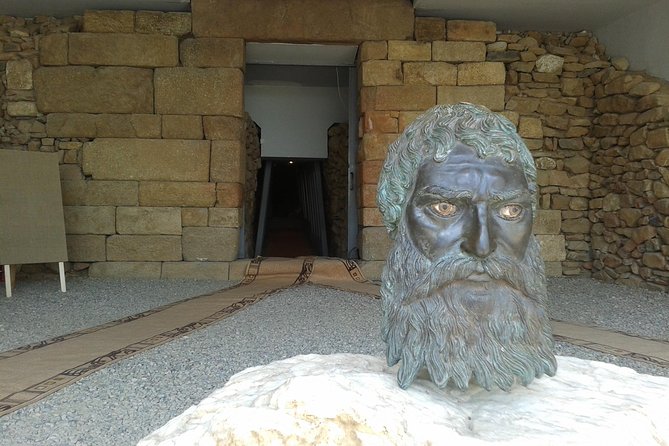
Reviewed · SOFIA TOURS
Valley of the Thracian Kings, Hidden Treasures
Ancient tombs await beyond Sofia. This full-day trip takes you into Bulgaria’s Valley of the Thracian Kings, where burial mounds, painted chambers, and museum artifacts reveal a civilization often overlooked by visitors. I like the included transport and admission fees, which make a long countryside outing simple to arrange. I also like the chance to see several very different Thracian tombs in one day, rather than stopping at just one famous site.
The main drawback is the distance. You may spend about six hours on the road, and the quality of the day depends heavily on your guide. Most guides described for this experience, including Ivan, Krassimir, Lyubo, Daniel, Adrian, and Meto, provided strong historical explanations, but one poor guide experience shows why it is sensible to confirm who will lead your tour.
In This Review
- Key points to know before booking
- Why the Valley of the Thracian Kings is worth the long ride
- The three-hour journey from Sofia
- Kazanlak’s UNESCO tomb and its painted chamber
- Griffoni Tomb and the scale of Thracian burial customs
- Ostrusha Tomb and its unusual ceiling
- A fourth tomb completes the ancient picture
- Iskra Historical Museum puts the objects back in context
- How much value do you get for $119.27?
- The guide can make or break this experience
- Who should book this day trip?
- Should you book Valley of the Thracian Kings?
- FAQ
- Where does the tour begin?
- How long does the tour last?
- Is transportation included?
- Which language is the tour offered in?
- How many tombs are visited?
- Is the Thracian Tomb of Kazanlak a UNESCO site?
- Is admission included?
- Is food included?
- Are children allowed on the tour?
- Can I cancel the tour for a full refund?
Key points to know before booking
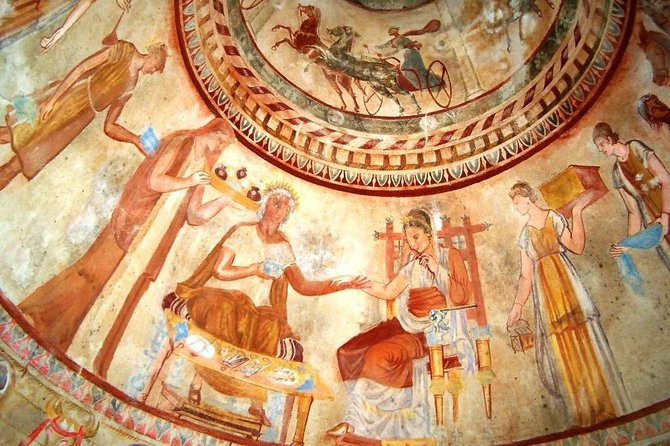
- Four Thracian tombs in one outing: See the famous Kazanlak tomb along with the Griffoni and Ostrusha tombs, plus another Thracian burial site.
- UNESCO-listed ancient art: Kazanlak is known for original frescoes from the end of the fourth century BC.
- A long but scenic drive: The journey from Sofia takes roughly three hours each way, with countryside, villages, fields, plains, and mountains along the route.
- Museum context matters: Iskra Historical Museum displays artifacts from the tombs and helps explain what the small burial chambers cannot show.
- A guide-led experience: The tombs are compact, and much of their meaning comes from clear explanation rather than from the physical spaces alone.
- Good value for a full day: At $119.27 per person, the price includes private vehicle transport, hotel pickup and drop-off, a professional guide, and entrance fees.
Why the Valley of the Thracian Kings is worth the long ride
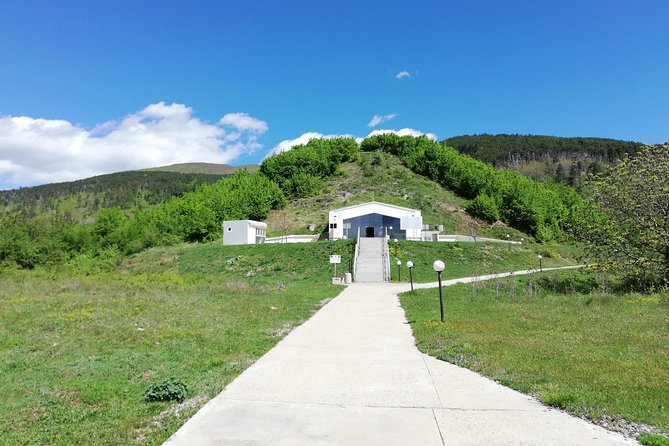
The Valley of the Thracian Kings is also called the Valley of the Roses. It is a center for rose-oil production and contains about 1,300 burial mounds, known as tumuli. Around 300 have been excavated, giving this broad agricultural region an unusual connection to ancient royal power.
The Thracians left no single empire or capital that neatly explains their world. Instead, archaeologists piece together their society from tombs, weapons, jewelry, painted scenes, pottery, and other objects. That makes this tour especially useful. You are not simply looking at old stones. You are trying to understand a culture through its burial customs and artistic work.
I find the subject appealing because it links archaeology with familiar names from ancient stories. Spartacus and Orpheus are part of the wider Thracian story, and a good guide can place those figures in context without turning the day into a string of disconnected legends. The best guides on this route, including Ivan, Lyubo, and a guide described as an active archaeologist, were praised for explaining both Thracian society and later Bulgarian history.
The setting adds to the experience. The drive passes through rural Bulgaria, with small towns, villages, agriculture, sunflower fields, plains, and mountain views. From some of the tomb sites, you may see Shipka and Buzludzha in the distance. It is a useful reminder that Bulgaria’s past is not confined to Sofia’s museums.
A few more trips of this kind worth weighing up:
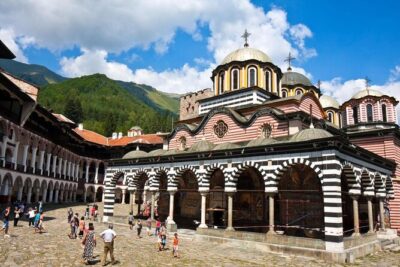
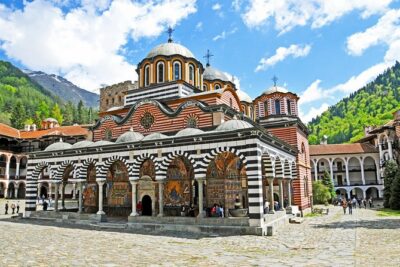
- Rila Monastery and Boyana Church Full-Day Tour
★ 4.5 · 918 reviews - Sofia Escape Room – Teorema Rooms
★ 5.0 · 895 reviews - From Sofia: Rila Monastery & Boyana Church Day Tour
★ 4.5 · 866 reviews
The three-hour journey from Sofia
Pickup begins at 8:00 a.m., and the operator collects clients from any point in Sofia. That is a real convenience, especially if you are staying in a hotel away from the city center. You do not need to arrange a taxi to a fixed meeting point or work out an early public transport connection.
Transport is by private vehicle, and the tour is offered in English. The vehicle was described in one account as a comfortable van, with very small groups of two or three people on that particular day. The published capacity allows up to 15 people, while the health and safety information describes small groups of up to seven and private tour options. Ask about your exact group size when booking if a quiet ride matters to you.
The drive is the biggest practical issue. The route takes close to three hours each way, and the return journey after the museum is about two and a half hours. That leaves roughly three hours at the tombs and one hour at Iskra Historical Museum, within a day of about 10 hours.
I would not book this outing if you dislike long road journeys. I would book it if you see the drive as part of the experience. The countryside changes the day from a museum visit into a look at central Bulgaria, and some guides keep the ride engaging with stories about archaeology, local history, and the places along the road.
Still, guide quality matters here more than on many sightseeing trips. One unhappy experience involved almost no commentary during the drive and limited answers at the sites. The driver was focused on the road, which is fair from a safety point of view, but the silence made the long ride feel much longer. If historical discussion is central to your plans, request a guide with a strong background in Thracian archaeology or history.
Kazanlak’s UNESCO tomb and its painted chamber
The first major stop is the Thracian Tomb of Kazanlak, the best-known burial site in the valley. It dates from the end of the fourth century BC and is recognized by UNESCO because its original frescoes remain unusually well preserved.
The tomb’s art is the main attraction. Painted burial chambers give you a direct look at Thracian beliefs and artistic skill, though the space itself is small. Do not expect a vast underground complex. The value lies in the surviving decoration and the careful explanation of what you are seeing.
Because the original frescoes are fragile, the experience may involve a reconstruction or a separate presentation rather than unrestricted access to every original surface. One account described seeing four tombs, including an excellent reconstruction. The precise access arrangement can vary, so you should ask your guide how the original and reconstructed spaces are handled on the day.
Kazanlak gives you the essential introduction to the tour: the Thracians invested heavily in burial monuments, and these tombs were more than simple graves. They were places of ceremony, memory, art, and status. A strong guide can help you notice details that would otherwise pass quickly, especially in a chamber where there is little room to linger.
Griffoni Tomb and the scale of Thracian burial customs
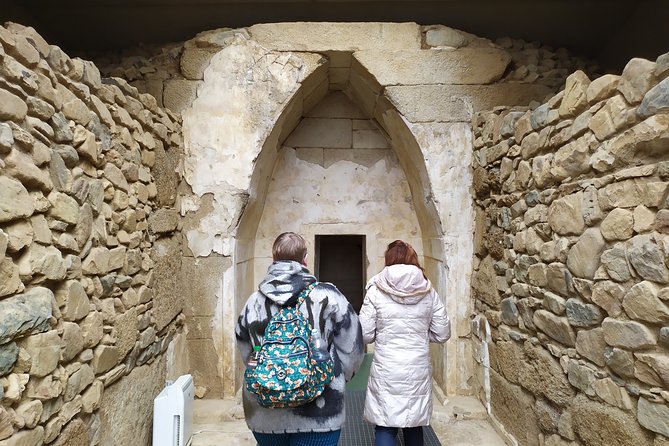
The Griffoni Tomb dates from the fifth century BC and has three chambers connected by a corridor. Valuable artifacts and works of art were found here, making it one of the richest Thracian burials discovered so far.
Its layout helps you compare different periods and burial designs. Instead of seeing one famous monument and assuming all Thracian tombs were alike, you get a sense of variation. The chambers, corridor, decoration, and objects all add pieces to the larger picture.
The physical visit is not likely to be long. These tombs are compact, and the tour schedule allows around three hours for the collection of tomb sites rather than several hours at each one. That is why your guide’s explanation is so important. You may see only a few rooms, but those rooms can represent a great deal of planning, labor, and social power.
If you have a strong interest in archaeology, take notes or keep a short list of questions. The best guides have been praised for explaining how tombs were maintained and excavated, as well as how the discoveries fit into Bulgarian history. That background turns a brief stop into something more meaningful.
Something quite different to do in Sofia:
- Communist Walking Tour of Sofia
★ 5.0 · 690 reviews - Admission Ticket to the Museum of Illusions in Sofia
★ 5.0 · 659 reviews - Wine Tasting in Heart of Sofia
★ 5.0 · 545 reviews - Sofia Highlights 2 Hour Sightseeing Walking Tour
★ 5.0 · 442 reviews
Ostrusha Tomb and its unusual ceiling
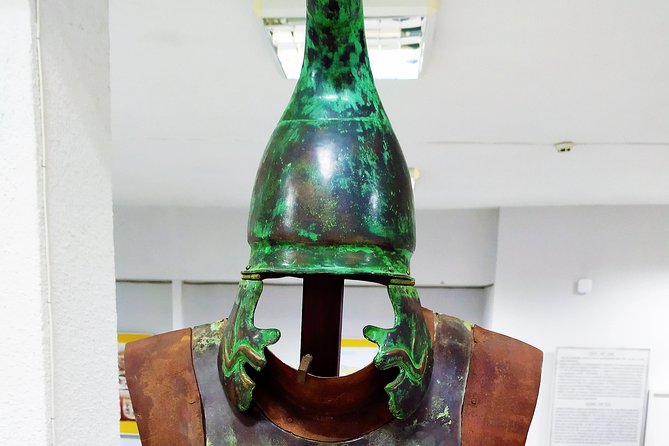
The Ostrusha Tomb dates from the fourth century BC and is known for its ceiling. The design combines relief work with fine decoration, including portraits, colorful figures, and floral ornaments.
This is one of the most visually distinctive stops. The ceiling gives the tomb a different character from Kazanlak’s painted scenes and Griffoni’s multi-chamber plan. Seeing them together helps you understand that Thracian art was not one fixed style.
The visit may feel short, especially after the long drive, but the contrast between the sites is the point. You are building a visual record of different burial traditions. I would pay close attention to the guide here, since details about the ceiling’s arrangement and decoration are easy to miss in a small, dim space.
The tombs also show why you should not judge the tour by photographs alone. Several accounts described the sites as more impressive in person than expected. Photographs can show a decorated wall or ceiling, but they cannot fully convey the enclosed setting, the age of the work, or the wider collection of burial mounds across the valley.
A fourth tomb completes the ancient picture
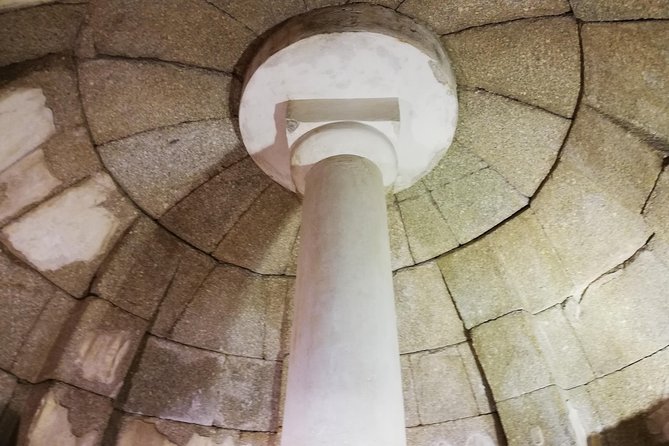
The route includes four Thracian tombs in total. The supplied description names Kazanlak, Griffoni, and Ostrusha, while the fourth site is part of the same group of burial monuments. This extra stop matters because it prevents the day from resting entirely on one UNESCO attraction.
Each tomb differs in age, layout, decoration, or condition. One may be a reconstruction, while another may be better known for its original remains or artifacts. The result is a more useful comparison than a single-site visit.
You should keep your expectations realistic. The tombs are not enormous, and many of the best objects have been moved into museum collections for study and preservation. If you want a grand palace or a large open-air archaeological park, this is not that kind of excursion. It is a careful look at small, important spaces spread across a large rural area.
Iskra Historical Museum puts the objects back in context
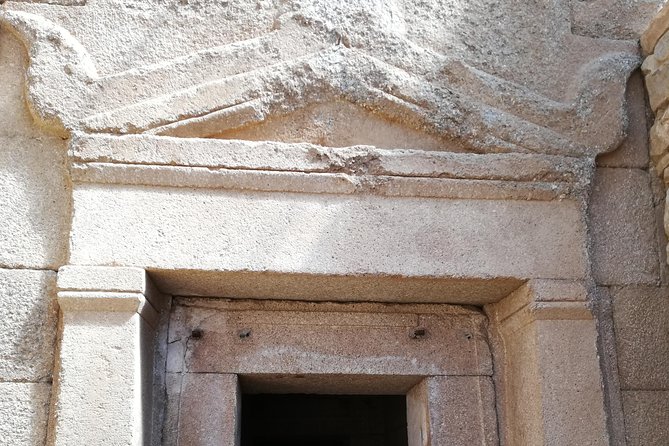
After the tomb visits, the final stop is Iskra Historical Museum, also called the regional archaeological museum. The visit lasts about one hour and includes admission.
This is not an optional add-on. It is essential to the day because many artifacts found in the tombs are no longer inside the burial chambers. The museum displays objects from the sites, along with important examples of Thracian art and material culture.
I like this order. You first see the places where the dead were buried, then you see the objects that help explain those burials. Weapons, ornaments, pottery, and other finds can give a clearer idea of status, craft, ritual, and daily life than a dark chamber alone.
The museum also protects you from a common problem with ancient-site visits: seeing a monument without understanding what was found there. A good guide can connect the displays to the tombs you visited earlier and explain why particular discoveries matter.
How much value do you get for $119.27?
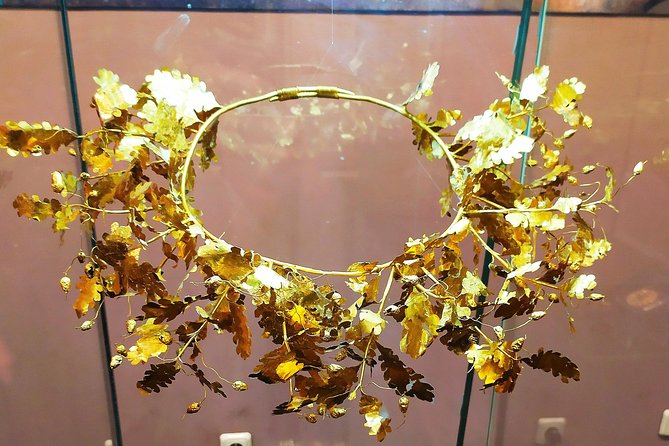
The price is $119.27 per person. That is not a bargain day trip in the narrow sense, but it includes several costs that would add up if arranged separately: hotel pickup and drop-off in Sofia, transport by private vehicle, a professional English-speaking guide, and entrance fees at all attractions.
The strongest value comes from the route. You are covering a distant part of Bulgaria that would be awkward to reach by public transport in one day, while visiting several tombs and a museum. Private transport also removes the need to drive yourself on an unfamiliar route.
Food and drinks are not included. Plan to pay for lunch separately. One guide took a visitor to a pleasant restaurant, but that should not be treated as a guaranteed part of the package. Ask your guide about the meal stop at the beginning of the day.
The price makes the most sense for someone who values convenience and interpretation. If you only want to see one tomb, a shorter or self-guided visit may cost less. If you want the full group of sites, historical explanation, and door-to-door transport, the package is easier to justify.
Group discounts are offered, and private tours are available. A private option may be worth considering if you have limited time in Bulgaria, want to ask many questions, or are concerned about receiving a guide whose interests match your own.
The guide can make or break this experience
This route depends on the guide. The chambers are small, the drive is long, and the museum objects need context. A skilled guide can turn the day into a clear story about Thracian burial customs, art, excavation, and Bulgaria’s wider past.
Several guides received especially strong praise. Ivan was described as articulate and full of useful anecdotes. Krassimir was noted for detailed explanations and an extra stop. Lyubo was praised for his history training, lively manner, and strong English. Daniel received credit for explaining the sites and suggesting a restaurant, while Adrian was praised for care, patience, and knowledge of Bulgarian history.
Meto was also described as professional and helpful, especially for travelers interested in mythology and the stories connected with Orpheus and Spartacus. These details suggest that the company has access to guides with very different strengths.
The warning is simple: do not assume every guide will provide the same level of commentary. Before confirming, ask who will lead the tour and whether that person has a background in Thracian history or archaeology. This is not a minor request. It can determine whether the six-hour drive feels like part of the adventure or dead time between attractions.
Who should book this day trip?
I would recommend it to you if you enjoy archaeology, ancient cultures, mythology, and rural scenery. It also suits anyone who wants to see more of Bulgaria than Sofia but does not want to rent a car.
The tour works well for adults and older children who can manage a long day and a moderate level of walking. Children must be accompanied by an adult. A moderate level of physical fitness is expected, though the information provided does not describe a strenuous hike.
You may want to skip it if you have only one free day in Sofia and prefer a relaxed schedule. The early pickup, long drive, several tomb visits, and museum stop create a full program. You should also think twice if you need extensive time inside each site or dislike enclosed archaeological spaces.
At $119.27, I see the tour as a practical way to reach a remote historical area. Its greatest strengths are the number of sites, the included transport, and the chance to learn from a strong guide. Its weak points are the long road time, separate lunch cost, and uneven guide performance.
Should you book Valley of the Thracian Kings?
Book this tour if you want a serious day of Thracian archaeology and are willing to spend much of the day on the road. The UNESCO tomb at Kazanlak is the headline, but Griffoni, Ostrusha, the fourth burial site, and Iskra Historical Museum make the route far more rewarding than a single monument visit.
Before paying, ask about the guide’s name, background, group size, and lunch plan. That small step can protect the experience from its main risk. With a guide such as Ivan, Krassimir, Lyubo, Daniel, Adrian, or Meto, this can be one of the most worthwhile history excursions from Sofia. With little commentary, it becomes a costly and quiet van ride.
Free cancellation is available up to 24 hours before the 8:00 a.m. start time. If you decide the long journey suits your plans, this is a strong choice for seeing a less familiar side of Bulgaria.
FAQ
Where does the tour begin?
The tour begins with pickup in Sofia at 8:00 a.m. Pickup is offered from any point in Sofia.
How long does the tour last?
The experience lasts approximately 10 hours.
Is transportation included?
Yes. The tour includes round-trip transportation by private vehicle, along with hotel pickup and drop-off.
Which language is the tour offered in?
The tour is offered in English.
How many tombs are visited?
The itinerary includes four Thracian tombs, including the Thracian Tomb of Kazanlak, Griffoni Tomb, and Ostrusha Tomb.
Is the Thracian Tomb of Kazanlak a UNESCO site?
Yes. The Thracian Tomb of Kazanlak is listed as a UNESCO World Heritage site because of its well-preserved original frescoes.
Is admission included?
Yes. Entrance fees and free admission to all listed attractions are included in the tour price.
Is food included?
No. Food and drinks are not included. You should budget separately for lunch and refreshments.
Are children allowed on the tour?
Yes, but children must be accompanied by an adult.
Can I cancel the tour for a full refund?
Yes. You can cancel at least 24 hours before the experience start time for a full refund. Changes or cancellations made less than 24 hours before the start time are not accepted for a refund.
New in Sofia
- Tour to Koprivshtitsa and the Buzludzha monument incl the Seuthes Thracian Tomb★ 3.5 · 3 reviews
- Transfer from Sofia to Stara Zagora★ 5.0 · 3 reviews
- Wine trip with The Jolly Vintners near Sofia★ 5.0 · 3 reviews
- Symbol of the Communism Buzludzha monument and the Rose valley★ 5.0 · 3 reviews
- Private 2 Hours Sofia Street Art and Graffiti Tour★ 5.0 · 3 reviews
- Cook and Eat with a Local in Sofia★ 5.0 · 3 reviews
- From Sofia: Seven Rila lakes- private tour★ 5.0 · 3 reviews
- Private Sofia Tour with Unique Local Food & Drinks Experience★ 4.5 · 3 reviews
Sofia Tours, compared.

Admission Ticket to the Museum of Illusions in Sofia
Read our review →
Sofia Highlights 2 Hour Sightseeing Walking Tour
Read our review →
Browse the lists this tour appears in